


Views: 0 Author: Site Editor Publish Time: 2026-05-15 Origin: Site


Designing a layout often grinds to a halt at the corners. L-shaped and blind corner base units typically create massive pockets of wasted square footage. This dead space leads to poor visibility and serious ergonomic strain when you hunt for buried cookware.
Homeowners and designers now recognize this blind corner dilemma as a major flaw in traditional cabinetry. Fortunately, the industry is transitioning away from static, hard-to-reach shelving. We now rely on dynamic, articulating hardware to reclaim lost storage volume effortlessly. You no longer need to crawl into dark recesses to find your appliances.
This guide provides an objective, evidence-based comparison of the three primary hardware interventions. You will learn how to evaluate each system based on specific layout constraints and daily usage requirements. Ultimately, these insights will help you finalize your design specifications with total confidence.
Lazy Susans offer the most cost-effective, classic rotation for L-shaped corners but leave peripheral space unutilized.
Magic Corners provide maximum cubic volume retrieval for blind corners, ideal for heavy cookware, but require precise installation and higher budgets.
Pull Out Baskets deliver superior ergonomics and compartmentalized storage, making them optimal for dry goods and pantry items, though they sacrifice some absolute storage volume compared to Magic Corners.
Selection should be dictated by the specific cabinet frame (blind vs. L-shape), door hinge constraints, and load-bearing requirements, rather than aesthetics alone.
Before selecting hardware, you must accurately identify your structural constraints. Every kitchen corner cabinet falls into one of two primary structural categories. L-shaped corner cabinets typically require bi-fold or pie-cut doors. They offer a symmetrical footprint but awkward central access. Blind corner cabinets hide half their internal volume behind the adjacent run of boxes. They only offer a narrow single-door opening.
To evaluate potential hardware solutions, we rely on three strict success criteria:
Accessibility: The hardware must eliminate all kneeling and deep reaching. It should bring items out to the user.
Space Utilization: We calculate the percentage of total cubic volume actively utilized. Empty peripheral zones count against the system.
Load Capacity: The tracks and pivots must handle heavy cast iron or small appliances. They cannot bend or fail under dynamic loads.
Durability serves as the ultimate deciding factor. Moving parts inside lower base cabinets are highly susceptible to wear. Heavy pots shift during movement. Dust and spills often settle into exposed tracks. Therefore, hardware quality and manufacturer warranties become crucial evaluation metrics. You need mechanisms engineered to survive thousands of cycles without degrading.
The traditional lazy susan remains a staple in residential kitchen design. These systems feature rotating circular or kidney-shaped trays. They spin on a central fixed pole or utilize individual shelf mounts. They easily adapt to symmetrical L-shaped corners featuring pie-cut doors.
This approach offers significant advantages. They are incredibly cost-effective and widely available across numerous suppliers. Their intuitive usability makes them perfect for lightweight items like Tupperware, dry goods, and mixing bowls. Furthermore, high-quality bearing-driven models boast remarkably low mechanical failure rates. They keep functioning smoothly for decades because they rely on simple physics rather than complex multi-point pivots.
However, this classic rotation method presents distinct limitations. The circular trays inherently waste the square edges of the cabinet interior. You lose valuable cubic inches at every corner. Additionally, they are prone to jamming. Items easily fall off the back edges during fast spins, blocking the rotation mechanism. Most importantly, they simply do not work well inside blind corner cabinetry.
Common Installation Mistake: Retrofitting these rotating trays requires careful measurement of the clear door opening. You must ensure the trays can physically clear the face frame during installation. Many remodelers forget to account for hinge protrusion, which blocks the tray insertion.
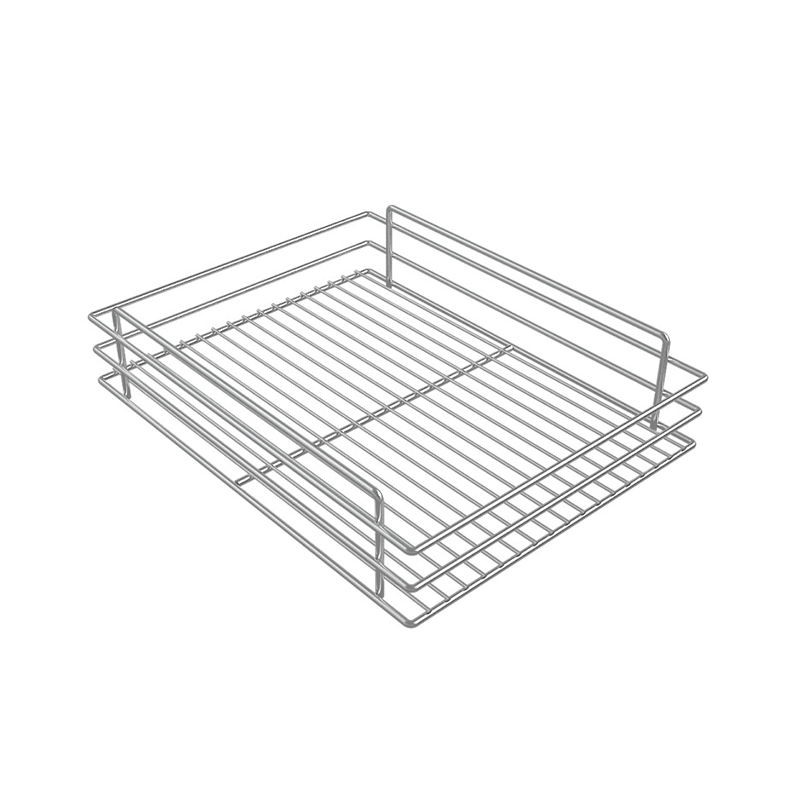
When you face a deep, inaccessible blind cavity, you need an aggressive intervention. This solution acts as an articulated, multi-tier shelving system. When you open the cabinet door, the mechanism pulls the front baskets out immediately. Simultaneously, it draws the hidden back shelves out of the dark recess and into the accessible zone.
This system shines in blind configurations where maximizing every inch of storage depth matters most. They bring the deepest corners into full light and reach. When manufacturers utilize heavy-duty slide rails, they achieve high load-bearing capacities. This makes them ideal for bulky pots, pans, and heavy stand mixers. Utilizing a robust magic corner basket configuration keeps these heavy items fully secure during the complex articulated movement.
Despite these impressive benefits, you must consider the drawbacks. They occupy the highest price point among all corner solutions. They also sacrifice a small amount of vertical clearance. The internal metal framing requires space to articulate properly.
Implementation Reality: You must start with perfectly plumb and level cabinet boxes. Even minor installation misalignments can cause the complex pivot mechanisms to rub or bind over time. If the floor sags slightly, the track alignment will suffer, leading to jerky movements.
Sometimes you prioritize smooth ergonomics over absolute maximum volume. Sliding wire or solid-base baskets mount onto heavy-duty drawer glides. Manufacturers often design them as a two-stage system. The front basket slides out and moves laterally. This motion then allows the back basket to slide forward entirely independently.
You will find this ideal for blind corners focused on dry goods, baking supplies, and smaller utility items. The exceptional ergonomics operate as smoothly as a standard high-end drawer. You can also customize the tier heights to accommodate tall cereal boxes or short spice jars. Deploying a dedicated corner pantry basket setup prevents small items from tipping or sliding when you pull the unit open.
You do trade away a few features for this smooth operation. They capture slightly less total volume than a heavy-duty magic corner. They also rely heavily on high-quality soft-close glides. Without these dampeners, fully extended heavy baskets will slam into the track stops, causing jars to shatter.
Best Practice: It is usually easier to retrofit a smooth pull out basket into existing boxes than a fully articulating multi-pivot unit. However, you must carefully verify your clear door clearance. Ensure the metal basket will not scrape the adjacent hardware or cabinet face when sliding outward.
To finalize your specifications, compare the core metrics objectively. We designed the following evaluation matrix to help you match hardware attributes directly to your project needs. We consider the functional differences, load constraints, and long-term maintenance profiles.
Evaluation Metric | Lazy Susan | Pull Out Basket | Magic Corner |
|---|---|---|---|
Budget & ROI | Low cost. Excellent basic return on investment for standard kitchens. | Medium cost. Strong ROI for pantry organization and daily ergonomics. | High cost. Maximum ROI for premium, high-volume cookware storage. |
Dynamic Load Capacity | Light to moderate. Best for plastics, dry goods, and basic bowls. | Moderate to high. Depends on glide rating; good for cans and jars. | Very high. Engineered to handle shifting cast iron and appliances. |
Ideal Cabinet Type | Symmetrical L-Shape with pie-cut doors. | Blind Corner requiring direct compartmentalized access. | Blind Corner requiring maximum volume extraction. |
Retrofit Difficulty | Low. Trays drop in easily if door clearance allows. | Medium. Requires precise alignment of side-mounted glides. | High. Demands perfectly plumb boxes and exact track positioning. |
When assessing hardware durability and load testing, always verify the dynamic load capacity. A stationary shelf might hold 100 pounds, but moving hardware experiences multiplied force during motion. Heavy cast iron strictly dictates multi-pivot or heavy-duty drawer glide solutions. Lightweight plastics perform perfectly well on basic rotational models.
Your installation timeline also matters. For new builds, you can design the cabinet dimensions directly around your chosen hardware. For retrofits, you must measure clear opening widths meticulously. Many articulating systems cannot physically squeeze past existing face frames or restrictive Euro-hinges.
Reclaiming wasted corner space transforms daily kitchen operations. Choosing the correct hardware depends entirely on your specific cabinet structure, budget limits, and stored inventory. You should not rely on aesthetics alone when selecting lower base cabinet mechanisms.
Select rotating trays for budget-conscious, L-shaped corner layouts where lightweight storage is the primary goal.
Deploy sliding basket systems for highly ergonomic, compartmentalized pantry storage inside blind corners.
Invest in fully articulating mechanisms to extract maximum raw volume for heavy cookware inside deep blind setups.
Your next steps require precise measurement. Audit your specific corner dimensions, noting whether you have a frameless or face-frame box. Measure your exact clear opening width while accounting for hinge protrusion. Review the manufacturer specifications thoroughly before you commit to any hardware purchase.
A: Yes, you can retrofit these systems. However, the cabinet must feature a blind corner configuration. Additionally, your minimum clear door opening width must meet the manufacturer's exact specifications. Even a quarter-inch deficit will prevent the mechanism from articulating past the face frame.
A: It depends entirely on the cabinet shape. Rotating systems are optimal for symmetrical L-shaped corners. Conversely, sliding baskets are vastly superior for blind corners where you must pull items out of a deep, dark recess.
A: Quality systems typically hold between 30 to 50 pounds per interior basket. You must always verify the dynamic load rating of the specific brand's slide mechanisms, as weight limits change while the unit is in motion.
A: Standard requirements vary significantly by brand. Blind corner systems generally require a minimum clear door opening of 15 to 18 inches. You must take accurate, precise measurements before ordering any articulating hardware.



