


Views: 0 Author: Site Editor Publish Time: 2026-05-16 Origin: Site


Most homeowners dread opening the cabinet beneath their sink. It often feels like a dark, chaotic cavern. Cleaning bottles vanish into the back corners. Awkward plumbing curves, bulky garbage disposals, and deep recesses make this specific environment incredibly challenging. Because of these structural hurdles, many people simply toss items inside and shut the door. Yet, leaving this area cluttered wastes prime real estate in your busy kitchen.
Transforming this high-clutter, low-utility zone into an accessible storage center requires highly targeted hardware. Standard bins simply do not work here. In this guide, you will discover how to evaluate and select the right systems to reclaim your space. We will explore how specific designs deliver superior durability, visibility, and spatial efficiency. You will learn exactly how to map out your cabinet and choose hardware bypassing every plumbing obstacle.
Visibility and Airflow: Wire structures prevent moisture buildup and keep stored items (cleaning supplies, sponges) visible, outperforming solid plastic or wood alternatives.
Clearance is Critical: Successful implementation requires mapping out P-traps, garbage disposals, and hinge arcs before selecting a cabinet organizer.
Configuration Dictates Utility: Choosing between sliding base mounts and a kitchen cabinet door basket depends on cabinet depth and item weight.
Load Capacity: High-quality sliding under sink baskets should support at least 30–50 lbs fully extended to handle heavy liquid cleaners.
The space beneath a kitchen sink presents unique architectural challenges. Unlike standard pantry shelves, this area houses essential home infrastructure. The central P-trap hangs awkwardly in the middle. Water supply lines jut out from the back wall. Bulky garbage disposals consume massive sections of the upper cabinet space. These elements create asymmetrical dead zones. A deep, unlit recess compounds the problem. Homeowners cannot easily see or reach the back of the cabinet.
Many people try to solve this using generic flat trays or solid-walled plastic bins. These solutions consistently fail. They create a "black hole" storage effect. To reach a bottle of glass cleaner in the back, you must pull out several sponges and soaps from the front. Items get knocked over. Spills occur unseen. Standard hardware assumes a perfectly square, empty box. The under-sink area is anything but empty.
To overcome these obstacles, an effective cabinet organizer must achieve several strict success criteria. We must measure performance against these standards:
Complete Accessibility: Hardware must bring items out into the light, eliminating blind reaching.
Obstruction Avoidance: Designs must work around, not against, hanging pipes and hoses.
Moisture Resistance: Materials must withstand high humidity and occasional drips without degrading.
Zonal Separation: The system must separate frequently used items from bulk refill bottles.
The cabinet base under a sink creates its own microclimate. It stays dark. Humidity levels remain high due to hot water running overhead. Wet sponges and damp brushes go straight into the cabinet. You must evaluate materials carefully before buying.
Solid plastic bins trap moisture underneath them. Mold and mildew easily form in these stagnant puddles. Wooden organizers look premium but sustain rapid water damage. A small plumbing leak can warp a wooden drawer permanently. Conversely, a premium kitchen wire basket allows constant airflow. Wire grids let wet items dry out quickly. They prevent moisture buildup entirely.
Visibility remains another crucial factor. When you store multiple opaque plastic bins under the sink, you lose sight of your inventory. See-through wire grids let you spot your favorite multi-purpose cleaner instantly. You never have to guess what hides in the back.
Durability directly impacts usability. Heavy-gauge steel wire lasts for decades. Flimsy plastic warps under the weight of heavy gallon jugs. Wood splinters over time. However, buyers must acknowledge a distinct risk factor. Low-grade wire can rust. To avoid this, always evaluate the surface treatment. Look for products utilizing industrial-grade chrome plating, heavy epoxy coatings, or pure stainless steel construction.
Material Type | Moisture Resistance | Visibility Level | Weight Capacity | Common Failure Point |
|---|---|---|---|---|
Wire Grids (Coated) | High (Excellent Airflow) | High (Fully Transparent) | High (Steel Frame) | Rust (If cheaply plated) |
Solid Plastic | Medium (Traps Water Underneath) | Low (Opaque Walls) | Low (Warps Easily) | Cracking under stress |
Wood Shelving | Low (Absorbs Moisture) | Medium (Open Fronts) | Medium (Heavy Base) | Warping / Mold growth |
When exploring under sink storage, dimensions and mechanical strength dictate everything. A beautiful design fails if the sliding mechanism jams. You must evaluate weight capacity and glide mechanisms first.
Liquid cleaners weigh a lot. A single gallon of bleach weighs over eight pounds. Stack several bottles together, and the load increases rapidly. You need ball-bearing glides for smooth operation. Cheap friction glides stick and stutter under heavy loads. Look for a baseline weight rating of at least 30 pounds for any base-mounted pull-out. Premium commercial-grade sliders easily support 50 pounds fully extended.
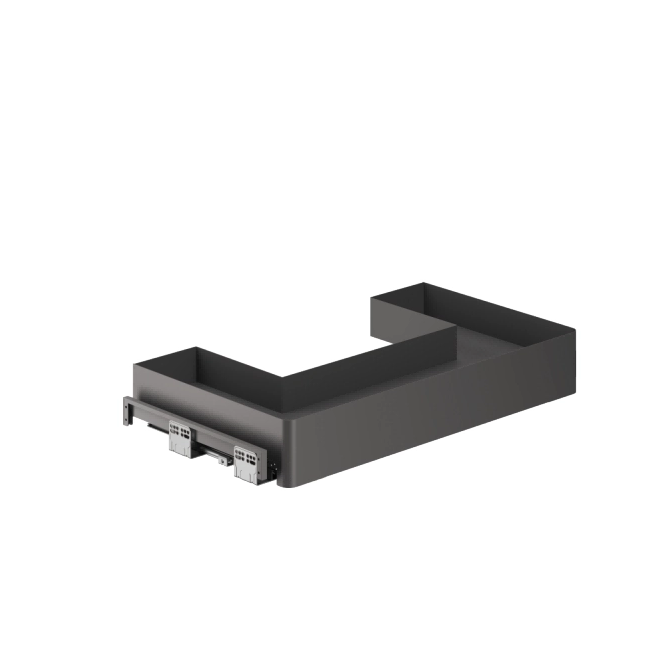
Next, evaluate dimensional flexibility. Because central plumbing ruins traditional rectangular storage, engineers developed clever workarounds. Many manufacturers offer L-shaped or U-shaped tiered designs. These shapes slide right past the central P-trap. The top tier stays narrow, avoiding the pipes. The bottom tier spans the full width of the cabinet floor. You must measure standard width, depth, and height clearances to ensure these sliding tiers clear your specific plumbing setup.
Finally, consider base stability. Wire spacing presents a unique challenge. Large bottles sit perfectly on wire rods. Small items, like loose dishwasher pods or tiny brushes, tip over and fall through the gaps. To solve this, select designs featuring a rigid wood base. Alternatively, look for units including custom-fitted plastic liners. Liners keep small items stable while maintaining the airflow benefits of the broader wire frame.
Every kitchen cabinet features a unique plumbing layout. No single hardware solution fits every home. You must match the configuration to your specific structural realities. We categorize these configurations into three distinct types.
Tiered Pull-Out Organizers: These represent the best choice for wide, relatively unobstructed bases. They utilize vertical space efficiently. Always place tall, heavy liquid cleaners on the bottom tier. Place smaller, lighter items like sponges and trash bags on the top tier. This weight distribution keeps the mechanism balanced and prevents tipping.
Narrow / Slimline Pull-Outs: Garbage disposals consume massive amounts of space. Often, you only have a six-inch gap between the disposal and the cabinet wall. Narrow, single-row sliding baskets slide perfectly into these tight crevices. They turn wasted vertical slivers into highly efficient storage columns.
Door-Mounted Storage: Sometimes the floor is too crowded. A sturdy kitchen cabinet door basket keeps daily items close. You can access dish soap and scrub brushes without bending down.
Door-mounted options do have limitations. You must evaluate door hinge weight stress. Overloading a cabinet door warps the hinges over time. The door will eventually sag. Furthermore, you must measure internal depth clearance. When you close the door, the basket pushes backward. If it hits an internal pipe or a bottom-mount pull-out, the door will not shut properly.
Purchasing the hardware is only half the battle. Installation dictates the final outcome. A sliding under sink basket transforms the lower shelf, but only if it fits. Measuring correctly prevents costly return shipments.
You need a strict framework for measuring clearances. First, measure the width at the narrowest point. Account for the intruding hinge hardware. Second, measure the depth from the back wall to the inside of the closed door. Do not measure to the outside frame. Third, measure the height up to the lowest hanging pipe or disposal unit. Always leave a one-inch buffer zone around all plumbing.
Installation methods vary widely. Bottom-mount screw installations offer permanent, highly stable solutions. Screwing the tracks directly into the cabinet floor ensures maximum weight capacity. However, renters usually cannot drill holes. Tension-based or freestanding models offer renter-friendly alternatives. A simple freestanding wire basket serves renters well, though it generally handles lower weight capacities than screwed-in tracks.
Watch out for common installation pitfalls. Many DIYers fail to account for the cabinet face frame lip. Traditional framed cabinets have a wooden lip at the bottom. If you screw a slide-out track directly to the floor, the sliding tray will crash into this lip. You must add wooden shims beneath the tracks to elevate them above the lip. Another frequent mistake involves ignoring door depth. As mentioned earlier, ignoring the depth required by a door-mounted basket when closed against internal pull-outs ruins the entire setup.
Organizing the space beneath your sink does not have to be a frustrating chore. Success relies entirely on logical shortlisting. Prioritize your specific clearance measurements first. Once you know your exact boundaries, select the appropriate configuration. Choose between L-shaped pull-outs, slimline sliders, or door-mounted racks based on your plumbing layout. Finally, filter your choices by material quality, ensuring high weight capacity and rust-resistant coatings.
Do not guess your measurements. The immediate next step is highly practical. Empty your current cabinet completely. Grab a tape measure and map the plumbing footprints. By understanding the physical limits of your cabinet, you can confidently purchase hardware guaranteed to maximize your hidden storage space.
A: Low-quality bare metal will rust due to high under-sink humidity. However, premium organizers mitigate this risk completely through specialized surface treatments. Products utilizing heavy industrial chrome plating, thick powder-coated epoxy, or pure stainless steel construction effectively repel moisture and remain rust-free for years.
A: Renters or those hesitant to use power tools have excellent options. You can use freestanding tiered baskets featuring wide, stable bases. Tension-rod sliding systems brace against the cabinet walls. Over-the-cabinet-door hooks also provide secure installation without requiring any drilling or permanent modification.
A: Standard residential wire racks typically support 15 to 20 pounds. However, heavy-duty organizers utilizing commercial ball-bearing glides easily hold 30 to 50 pounds fully extended. Always check the manufacturer's weight rating if you plan to store multiple heavy gallon jugs of liquid cleaner.
A: Yes. Manufacturers design specific "L-shaped" and "U-shaped" organizers exactly for this purpose. The top tier is purposely narrow to bypass the hanging disposal unit, while the bottom tier utilizes the full cabinet width. Narrow slimline sliders also fit perfectly into tight gaps beside disposals.



